
What We All Can Do
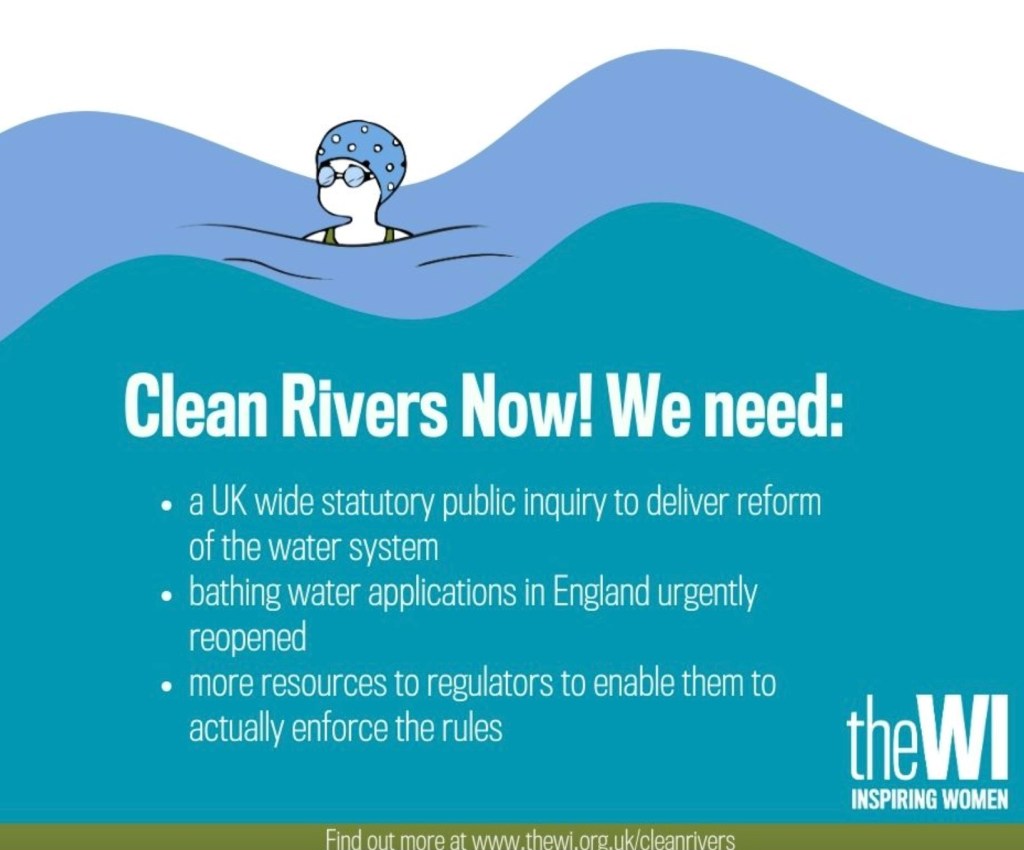
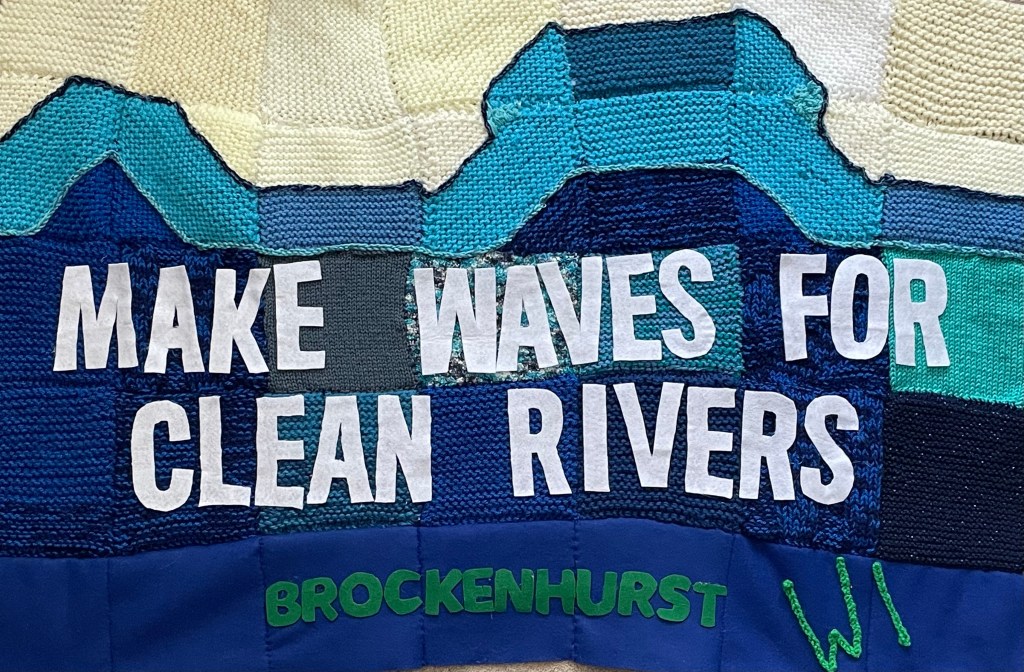
The WI have always been a campaigning organisation so we are proud to be part of this campaign. We want to see an end to pollution of our rivers so that we can clear up our waters for our health and wellbeing, our environment, and to safeguard them for the future.
We are pleased to see the government’s plans for a comprehensive review of our water system, but it needs to pave the way for transformative legislation that tackles the water crisis once and for all. The WI will keep putting pressure on the government to make sure this opportunity is not wasted.
So what can we do to help? There are steps we can all take to do our bit. Even little steps and actions can make a big difference in the long run. Here are some suggestions:
1. Please sign these petitions:
A. River Action’s Rescue our Rivers Petition, supported by over fifty organisations, are calling on political leaders to rescue Britain’s rivers for nature and people by:
1. Ending sewage pollution
2. Stopping agriculture polluting our rivers
3. Preventing harmful chemicals at source
4. Securing water supply for everyone
5. Bringing nature back from the brink
6. Reforming planning rules and prompting natural solutions
7. Protecting river habitats and wildlife
8. Monitoring pollution of all rivers
9. Inspecting polluters and enforcing the law
10. Working together to restore our rivers.
Click here to sign.
B. Protect our right to swim -It’s time for the government to stop letting water companies off the hook on sewage spills, so we can all enjoy our right to swim. Click here to sign.
C. Force the Government to act now to ‘Meet Legally Binding Targets for River Health’ . Click here to sign.
2. Consider volunteering/joining/donating to these organisations:
3. Email/write to your MP.
There is a template to email your MP here from The Rivers Trust (a campaigning organisation).
For those living in the New Forest East constituency, Sir Julian Lewis does not accept emails, so please write to him at :
House of Commons
Westminster
London
SW1A 0AA
4. Don’t put ‘undesirable ‘unflushables’ down the toilet! When sanitary items like wipes, tampons
and nappies are flushed down the toilet ,they can create blockages in sewers. In a blockage, to stop sewage ‘backing up’ and flooding people’s homes, emergency valves are triggered and sewage is released into local rivers and the sea were they can harm wildlife.

5. Don’t put fat down the kitchen sink as this causes fatbergs in the sewers! Fats, oils and greases that are put down sinks, combine with ‘unflushable’ items and are the prime cause of fatbergs clogging up the country’s sewers. If fatbergs aren’t removed, they can lead to pollutions, toilets backing up and overflowing, and sewer collapses.

6. Think carefully about the cleaning products and chemicals that you are putting down your sinks and drains and look for ‘eco’ alternatives.
BBC Science Focus states that “Even after passing through water treatment plants, small quantities of chemical compounds from cleaning products can find their way into rivers, ponds and lakes and have adverse effects on aquatic life. Phosphates in laundry and dishwasher detergent have a fertilising effect, triggering the widespread growth of algae that saps away the water’s oxygen, reducing biodiversity.”
Take a look our Day 6 post where members put green cleaning solutions to the test.

We like this quote from EarthWatch: “If it goes down the sink, it ends up in your drink”. So we ask you all to be aware of the cleaning products that you use and their effect on the environment. Look at labels and ask yourself “is it costing the earth if I use it?” “What can I used instead?”
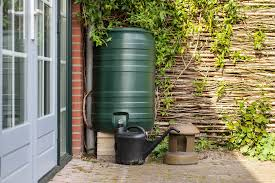
7. Water Butts, Slow Drain Water Butts and Soakaways -Consider the water that is coming off you roof. Can it be collected to be used later, or released slowly so it doesn’t overwhelm the main drains? Southern Water website has more information – click here to read it.
8. Septic Tanks -If you have a septic tank, have it inspected annually to make sure they are working correctly and not unknowingly causing pollution.
9. Dog Flea and Tick Treatments – At our Awareness Walk in 2023, One of the speakers, Russ Wynn from Wild New Forest, talked about how some dog flea and tick treatments have an impact on the New Forest rivers and streams when dogs who have been treated with certain chemicals go in the water as they can cause potential harm to New Forest waterbodies and their aquatic fauna.
New Forest Dog Owners has this great blog about the subject which can be read here.
10. Think about the food you are buying. River pollution from agriculture is also a huge problem, where 60% of nitrates found in water come from artificial pesticides and fertilisers from agricultural run-offs. We are consumers of products grown by intensive farming and we can all make informed choices of what we buy. Can we buy food that isn’t intensively farmed? Can we make a swap and buy organic products? Even if it’s just one small change, it can help. This report about industrial chicken production might give you ‘food for though’.
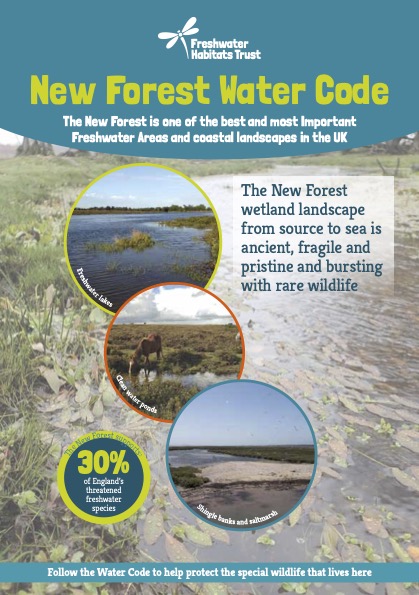
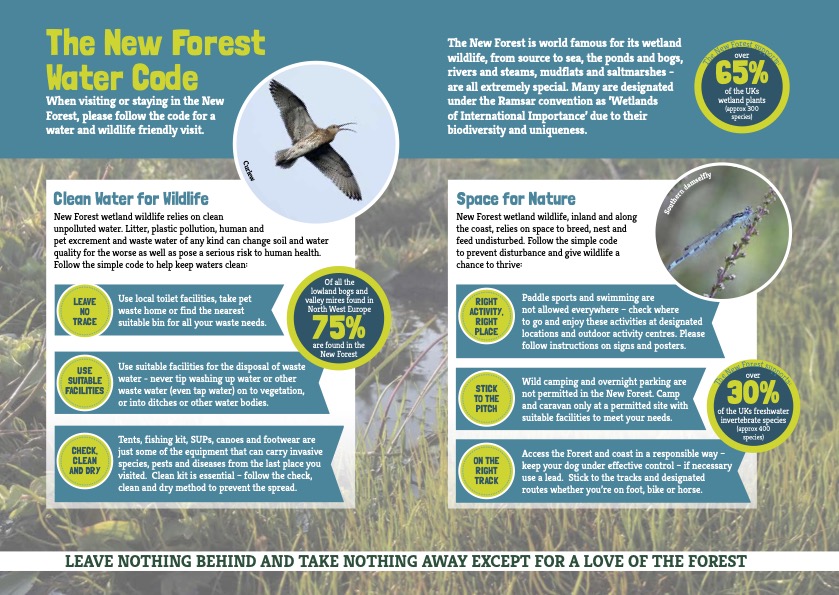
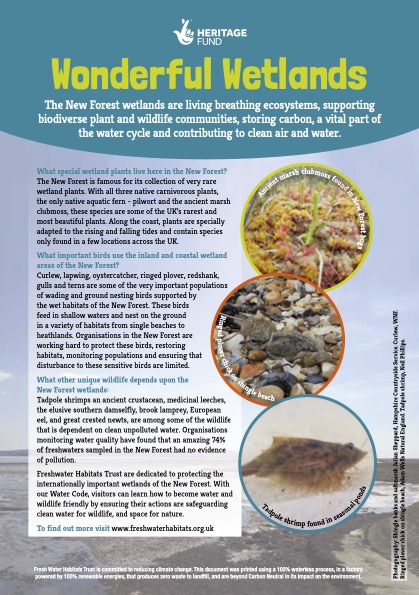
11. Leave to Trace and The New Forest Water Code. Brockenhurst WI members who live in a Special Site of Scientific Interest (SSSI), a Special Area of Conservation (SAC), and a Ramsar site as a Wetland of International. This makes it especially important to protect our rivers in this special area that we live in.
The New Forest’s wetland wildlife depends on clean unpolluted water. The Freshwater Habitats Trust has a ‘Leave no Trace’ campaign to help us to take positive steps to protect the Forest’s internationally important wetlands and freshwater habitats. Familiarise yourself with this and the New Forest Water Code.
Did you know there is a dedicated website called Pee Place that provides an interactive map for your convenience? Plan ahead when you are out and about!
12. Read the The State of Our Rivers – Report from The Rivers Trust 2024 here to learn what impacts your local river, the various sources of pollution and what can be done about it.
This list is not inclusive and we are sure that there are many other things that we can all do to bring about change to clean up British waterways, but it is a starting point which we hope will give you some ideas and spur you on to taking action for our rivers.
Do leave a comment if you have any further suggestions.
Thank you for following and supporting our Week of River Action.
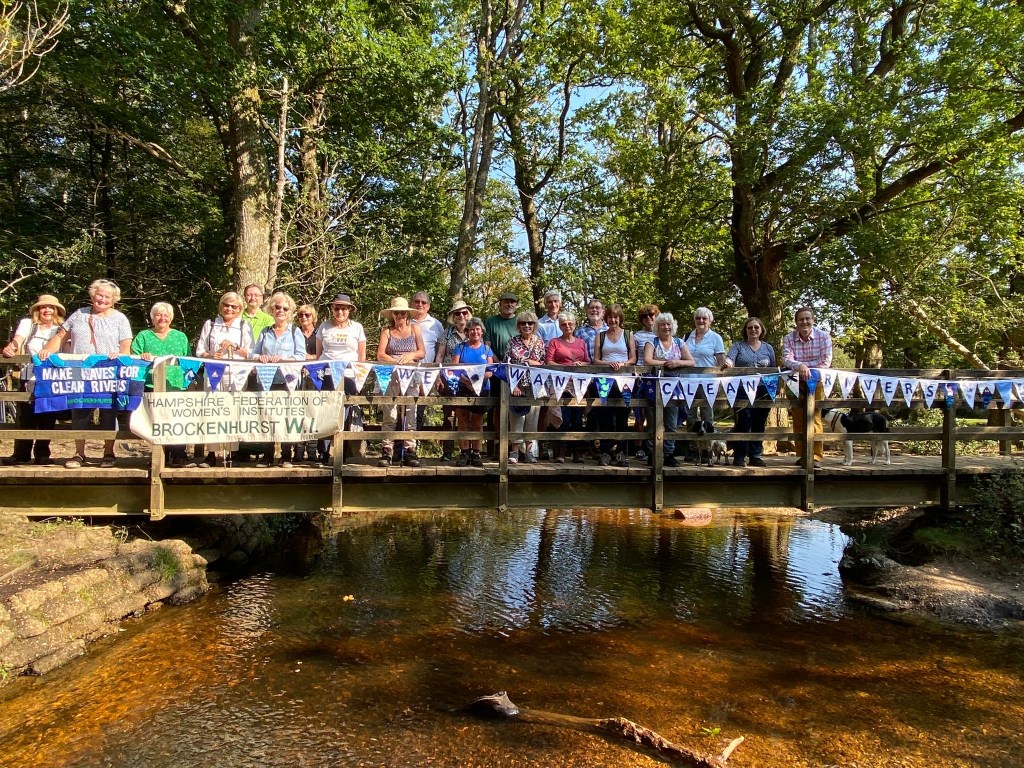
 Brockenhurst Women's Institute
One thought on “The WI Week of River Action 2024 -Day 7”