
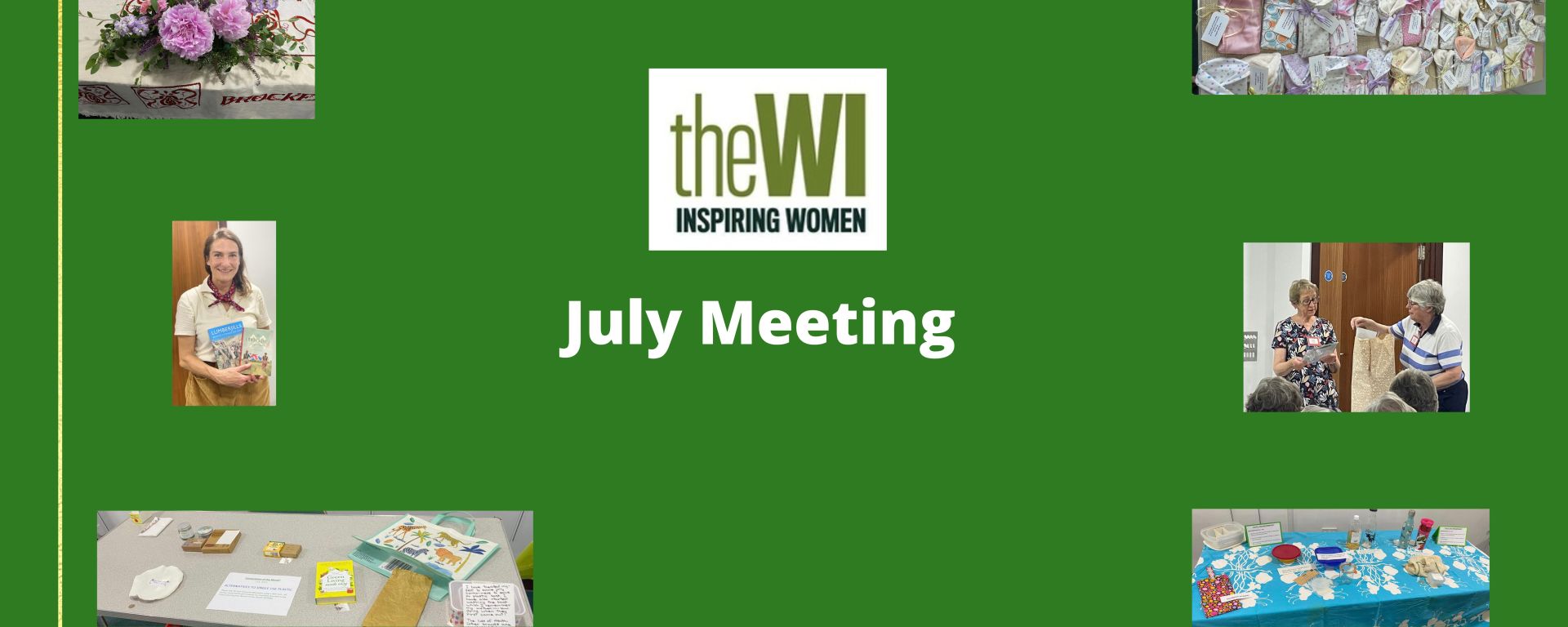
This was a packed evening with five guests, again with the pleasure of having Jude Vaughan, the National President of New Zealand Federation of Women’s Institutes with us.
There were lots of sign-up sheets and a display of Hampshire WI Activities. Find out more information about these events here
Evelyn’s presented Elaine with a Rose plant to thank her for being our President for the past two years.
Evelyn congratulated all those members who have entered the New Forest Show – a record number! Entries for the New Forest Show entries must be checked in to the WI tent at New Park Showground between 9am and 11am on 24th July. If members would prefer, Evelyn has kindly offered to take entries and check them in for us, so if you would like Evelyn to take your entry , she needs them taken to her house in advance. She will be home and accepting entries after 3pm on Sunday 23rd July or by arrangement at other times.
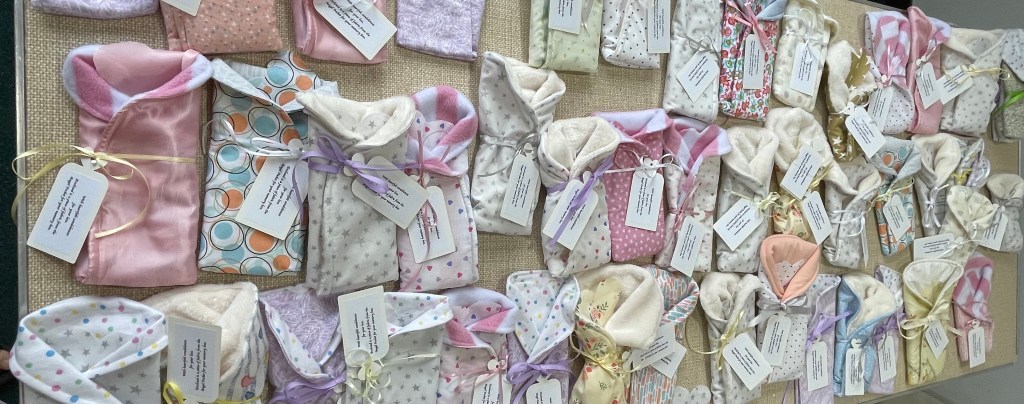
We had a display of ‘Angel Pockets’, which our craft group made under Kim’s tutelage. These small, soft wraps are used in hospitals so stillborn babies can be presented to their parents.
Our ‘Competition of the Month’ tied in with Plastic-free July and also our pledge as part of ‘Plastic-Free Brockenhurst’ and members were asked to think of an idea, write down or even make, something to demonstrate actions taken to remove plastic items in our everyday lives to make a difference to the tide of plastic which threatens our planet.
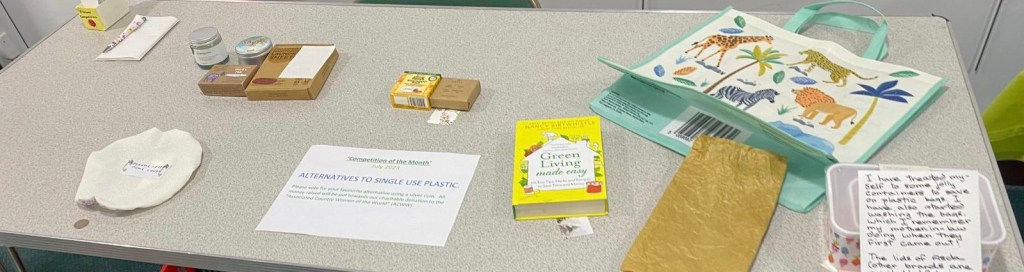
Evelyn’s bowl cover got the most votes (the most silver coins). Coins are donated to ACWW.
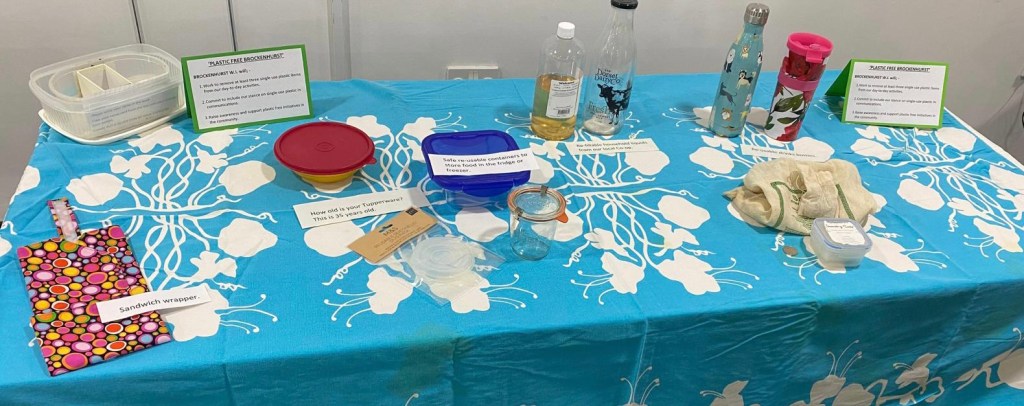
Kim made a great display of plastic-free ideas that we can adopt to reduce our use of single use plastics as pledge as part of ‘Plastic-Free Brockenhurst’. A further post can be read here.
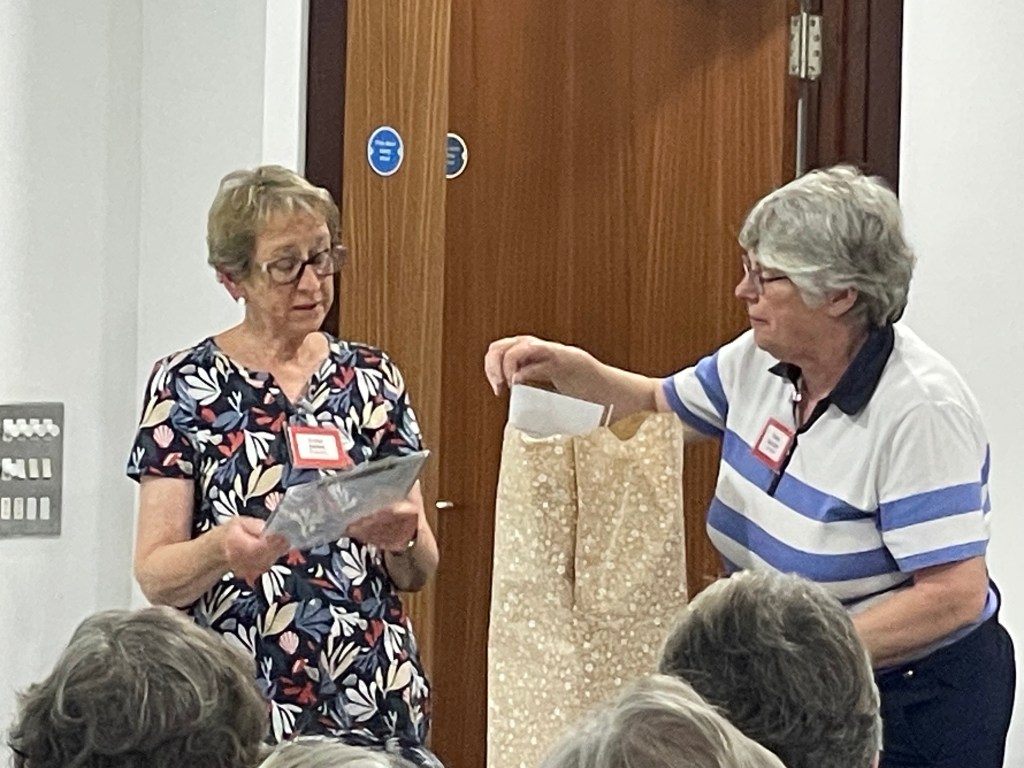
We also had our usual raffle run by Maureen and April. It looks like Sue G was keeping April’s seat warm for her!
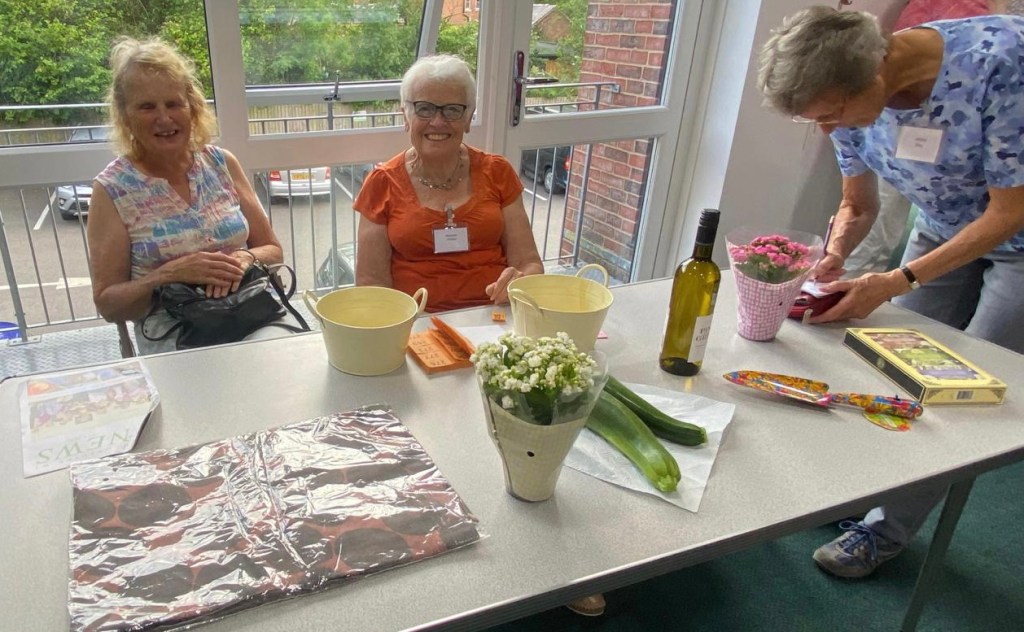
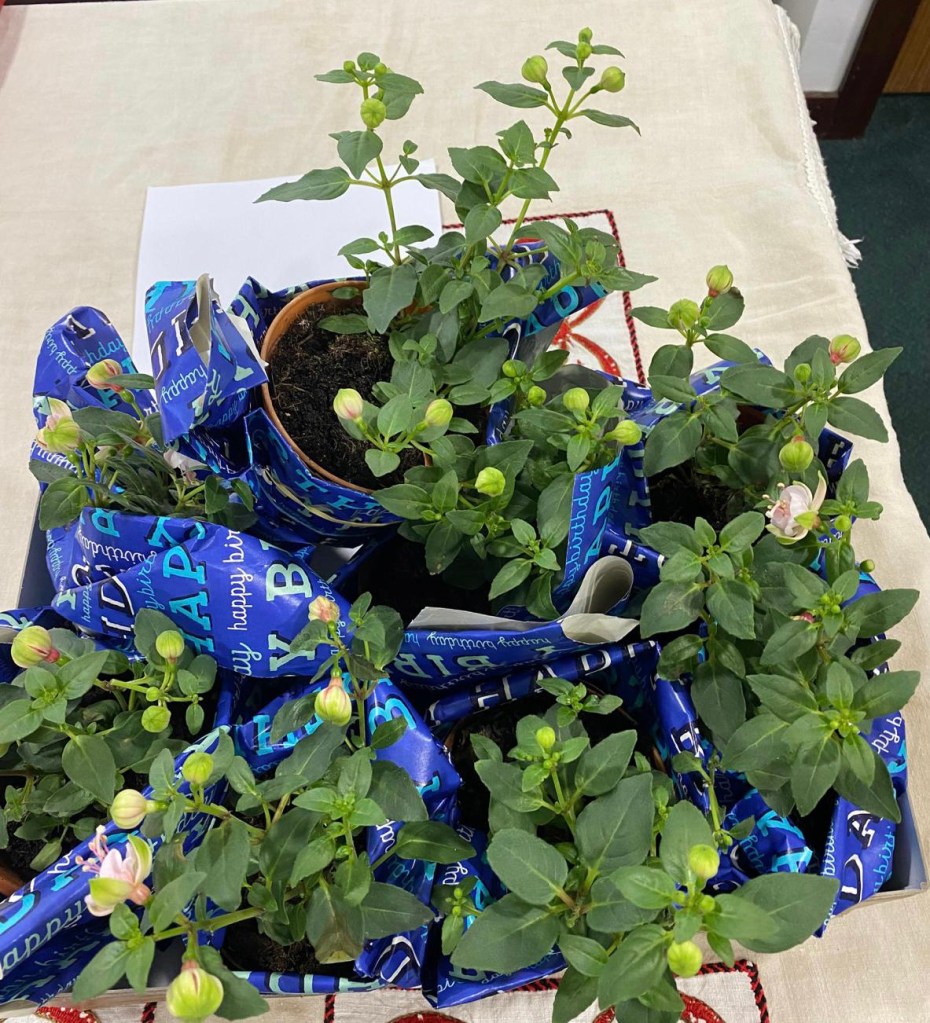
Birthday flowers were presented to our seven July Birthday girls.
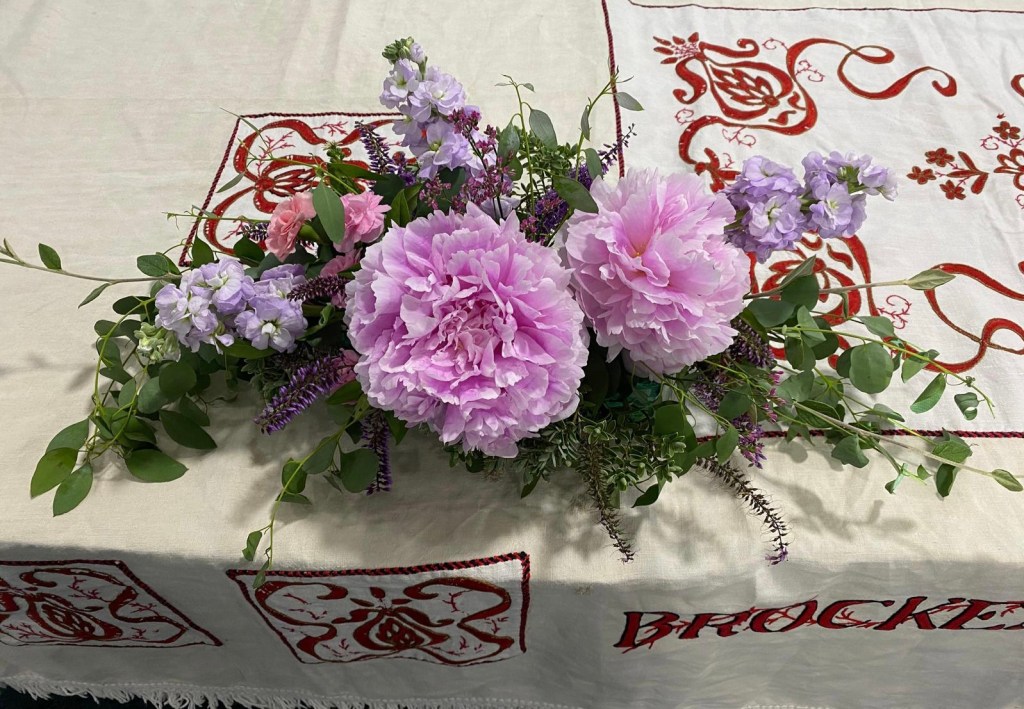
The beautiful table flowers were arranged by Karen Whitty.
Our thanks go to Janette, Sue G and Caroline for preparing and serving the refreshments.
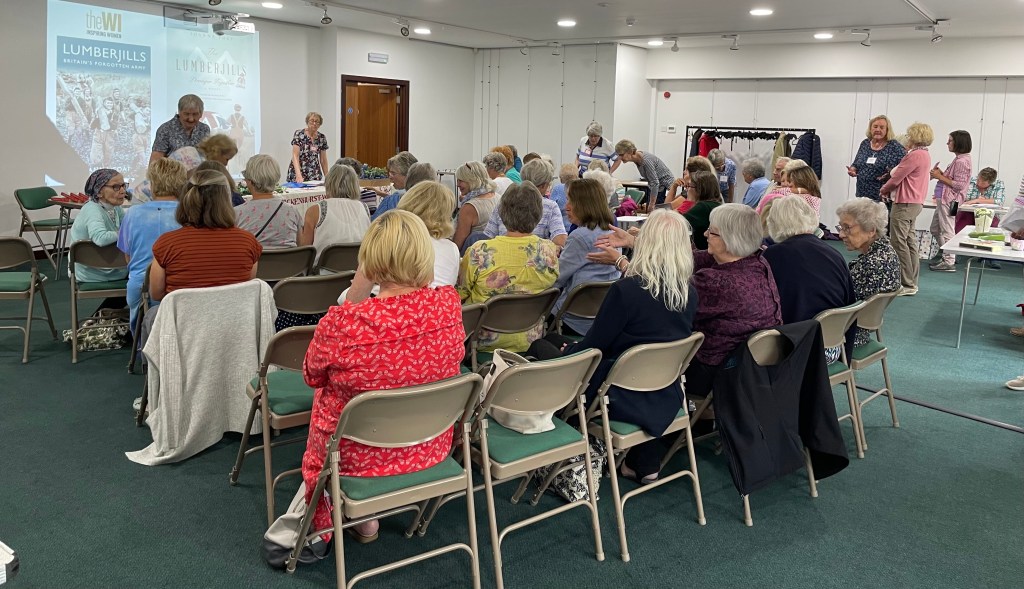
Our speakers at this meeting was Joanna Foat who talked to us about the fascinating subject of The Lumberjills – Britain’s forgotten army. Joanna was even dressed in the uniform of a Lumberjill!
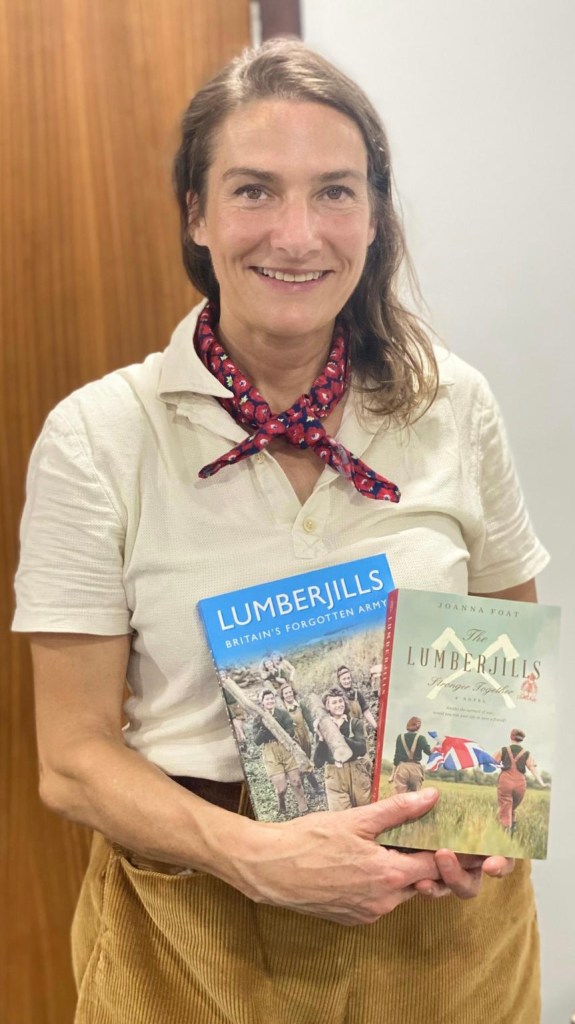
We learnt that on the eve of the Second World War, with only seven months supply of timber stockpiled, Britain was in trouble. Timber was critical to the war effort: it was needed for everything from aircraft and shipbuilding to communications and coal mining. Lacking in both men and timber, the government made a choice. Reluctantly, they opened lumber work for women to apply – and apply they did. Enter the Lumberjills.
The Women’s Timber Corps had thousands of members who would prove themselves as strong and as smart as any man: they felled and crosscut trees by hand, operated sawmills, and ran whole forestry sites. They may not have been on the front line, but they fought their own battles on the home front for respect and equality. And in the midst of wartime, all weathers and heavy labour, they lived an exciting life in the forest. Many Lumberjills worked in the new Forest and there were twenty-six sawmills which they also operated.
Many a firm friend was made around a campfire while doing each other’s hair for an evening dance. They discovered a new found freedom, nomadic existence, romance and even soulmates. Joanna gives them the recognition they so truly deserve.
Joanna read out an account from a New Forest Lumberjill which she has kindly allowed us to share:
“Within a year of its inception the Women’s Timber Corps were confidently handling all the tools of the seasoned forester – axes, cross cut saws, bushmen, spokeshaves for bark stripping, sledgehammers, cant hooks, billhooks, wedges and grinding stones.
The girls worked in pairs, were expected to walk everywhere and it required a lot of stamina. Sometimes girls had to move and find new billets as often as three times a week. This created problems with laundry, boot repairs and keeping up with the mail which often arrived weeks late.
Orientation was found even more difficult because in anticipation of a German invasion all sign posts had been taken down and getting lost was a daily hazard. One girl carefully observed ‘I did not know the New Forest was so big till we started to walk through it. Twice we got lost so my friends from home sent me a compass.
Journeys where made even more arduous because they had to carry their belongings with them. One group decided to travel light but after three weeks of rain everyday and the difficulty of not being able to dry their clothes they changed their idea.
They walked phenomenal distance and became exceptionally fit. One team of pole markers spent some time in the New Forest, lodging in eight different billets and walking an estimated 600 miles. But they grew to love the challenge of free, nomadic existence, relishing in the heart of these ancient forests, the timeless loveliness of a wild, secret landscape known to few.
The New Forest alone had 26 sawmills produced 12.5 million cubic feet of timber and almost all the conifer plantation between 20 and 35 were cut only crops of special silvicultural interest being conserved. Crops of 40 to 60 years of age where placed in the lowest category in order of availability for felling with object of preserving, if possible, a stock of saw timber to tide over the lean years which where bound to follow after the war.”
Those ladies were unsung heroines for decades, and it was good to hear that their valuable work in the war effort is at last recognised. Maureen told us that both her Mum and Nan were both Lunberjills (one having the loss of a finger to show for it!)
Many of our members went away with one of Joanna’s books to learn more.
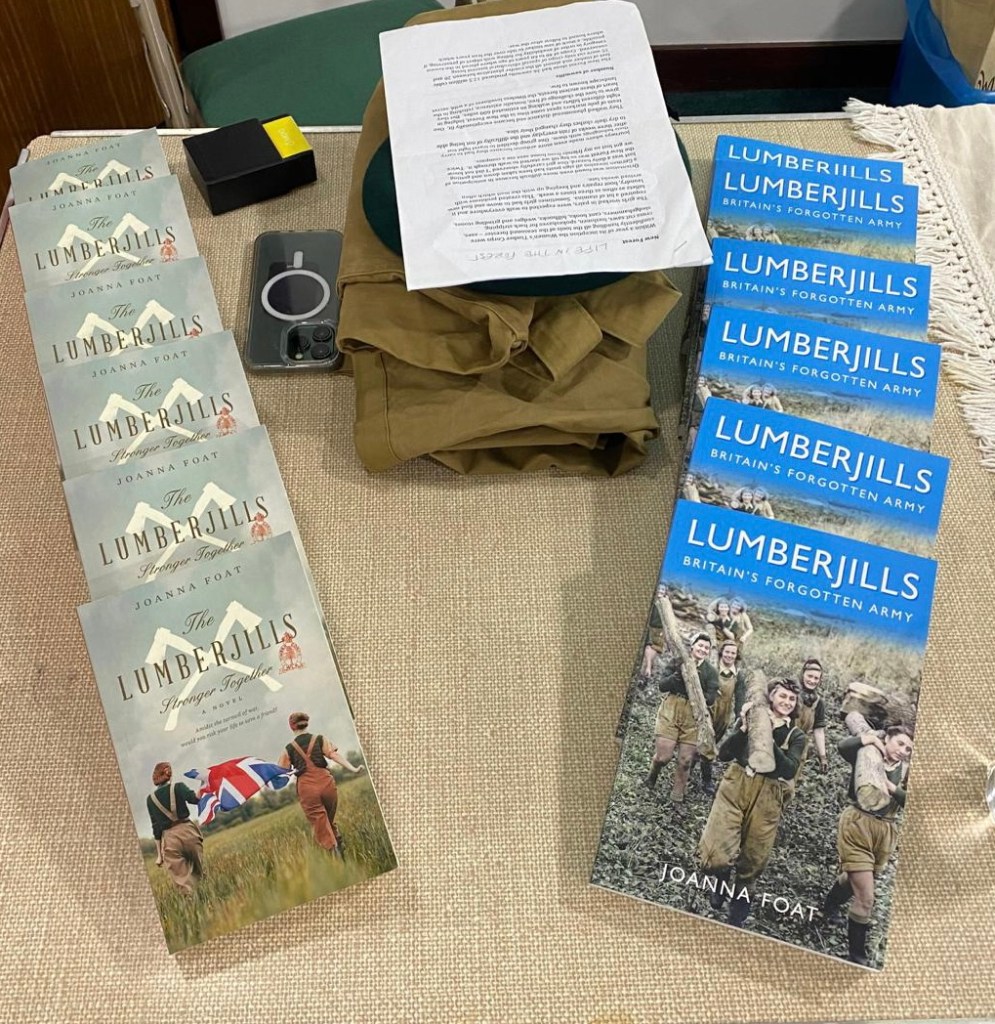
As many of our members are from local families, we all found this an informative and inspiring talk. Those ladies were unsung heroines for decades, and it was good to hear that their valuable work in the war effort is at last recognised.
At our next meeting on 11th September, we will have the judging of our annual competition, this year being growing a chilli plant. The winner will be the green-fingered member with the most chillies!
The speaker will be Helen McGinn, who appears regularly on Saturday Kitchen on BBC television. Her talk is entitled “My Life in Wine”. We meet at Brockenhurst Village Hall at 7pm for 7.30 on the second Monday of the month. If you would like more information please email us.
Thanks got to Jayne J for the photographs.
 Brockenhurst Women's Institute
One thought on “July Meeting 2023”